Looking for the best store-bought protein balls? Honest answer: the best one is the one that’s clean enough to eat every day and tasty enough that you actually want to. Here’s exactly what to check on the label — and how to spot a candy ball wearing a protein costume.
“Protein ball” can mean a real-food snack with nuts, seeds, and a clean protein source… or a sugar bomb with a health-y label. The difference is all in the ingredient list. Use this 6-point check and you’ll never get fooled again.
How to Choose: The 6-Point Check
1. A real-food ingredient list
Flip the bag over. The best protein balls read like a recipe — nut butter, seeds, oats or almond flour, a little honey — not a chemistry set. Fewer, more recognizable ingredients almost always means a cleaner snack.
2. Actual protein (from real sources)
Check both the grams and the source. You want a meaningful amount of protein from real foods (nuts, seeds, a simple plant or whey protein) — not a token 1–2 grams, and not all from cheap fillers.
3. No sugar bomb
“Energy” shouldn’t be code for dessert. Scan the added sugar and where the sweetness comes from — honey, dates, or maple beat corn syrup and cane-sugar overload every time.
4. Fits your diet
Grain-free? Gluten-free? Dairy-free? Vegan? Nut-free? Read for your needs — and know that truly grain-free is rarer than gluten-free (most balls lean on oats). If grains are out for you, look closely.
5. Built to last — and to arrive fresh
A great protein ball is shelf-stable without a preservative list a mile long. And if you’re ordering online, it should be made to show up fresh, not melted or stale.
6. It actually tastes good
The cleanest ball on earth is useless if you won’t finish the bag. Taste is a feature, not an afterthought.
Red Flags to Skip
- An ingredient list you can’t pronounce (or that runs 25 items long).
- Sugar — or a sugar alias — in the first two ingredients.
- “High protein” that’s mostly isolate filler and not much actual protein.
- Vague buzzwords (“natural,” “clean”) with a label that doesn’t back it up.
How Wholly Balls Stacks Up
We’re biased — obviously. But we built Wholly Balls! to pass this exact checklist, because it’s the snack we couldn’t find on the shelf:
- Real-food ingredients — nut butter, seeds, real stuff you can pronounce. No artificial sweeteners, ever.
- 9 grams of protein per serving from real sources.
- Grain-free, gluten-free, dairy-free, and non-GMO — the grain-free part is the rare one.
- Shelf-stable and shipped fresh — no melty mess, no preservative novel on the back.
- Ridiculously delicious — six flavors that taste like a treat, which is the whole point.
(One honest note: our bites contain peanuts and tree nuts, so they’re not a fit if you need nut-free.)
Best Store-Bought Protein Balls: FAQ
Are store-bought protein balls healthy?
They can be — it depends entirely on the label. Real ingredients, a real protein source, and modest added sugar make a genuinely good snack. Use the 6-point check above.
Which store-bought protein balls have the most protein?
Look for ones that list a real protein source and a meaningful grams count per serving. Wholly Balls! deliver 9g of protein per serving.
What’s the best grain-free option?
Grain-free is the hardest box to tick since most balls use oats. Wholly Balls! are grain-free by design — a good place to start.
Skip the label-reading. Start here.
Want a store-bought protein ball that passes every point on this list? That’s literally why we exist — crazy-clean, grain-free, ridiculously delicious, shipped fresh.
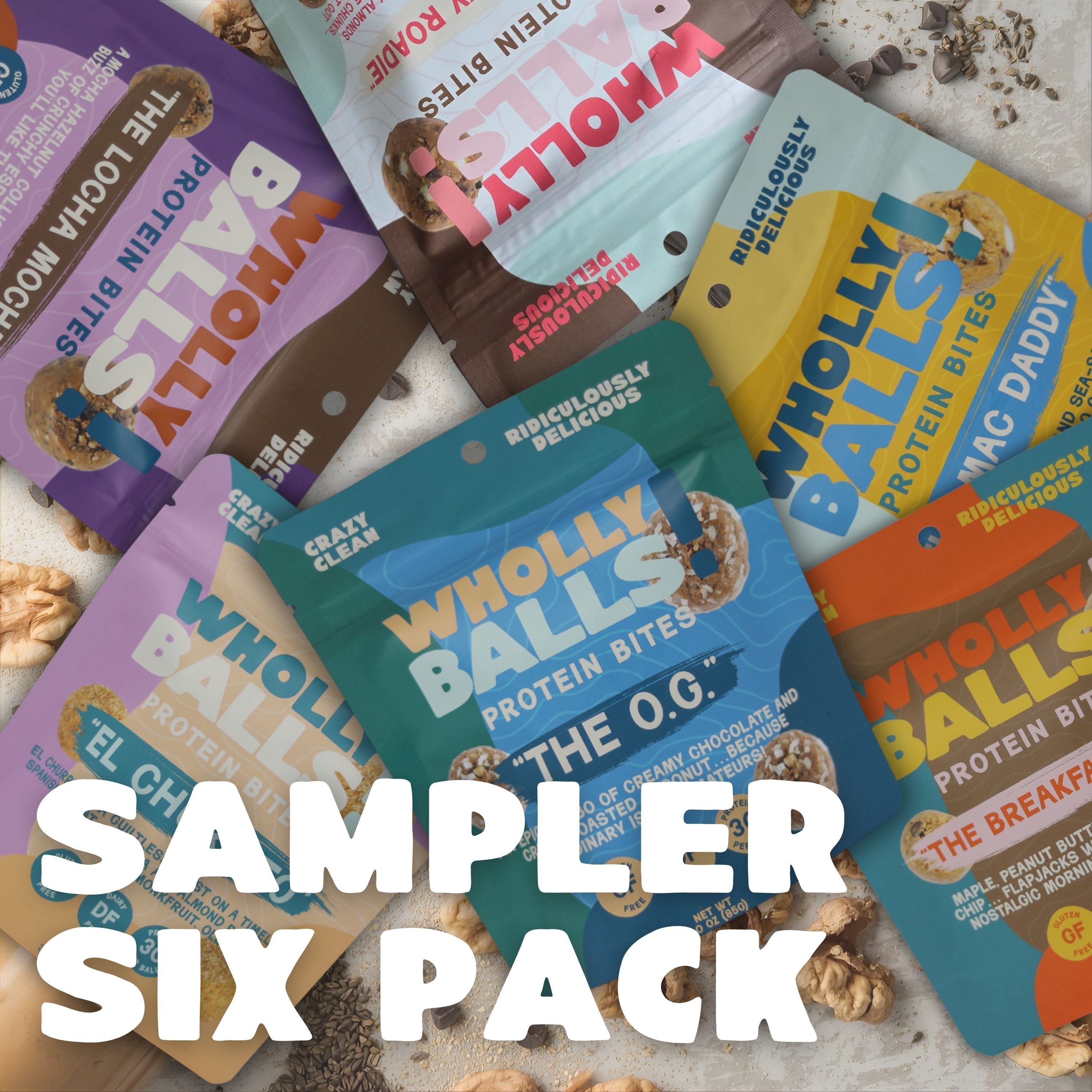
Try the 6-flavor sample pack.
Share:
Peanut Butter Protein Balls: No-Bake, Grain-Free, and Ridiculously Good
Grain-Free Energy Balls (Paleo-Friendly, No-Bake, No Oats)